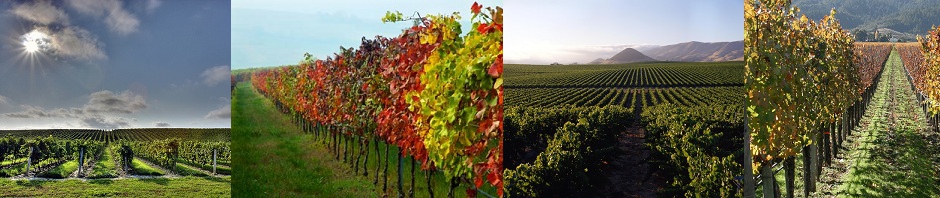
Yesterday was a day to sit back, sip wine and contemplate life, simply because most of the city was stuck indoors as Mother Nature was doing her best to pretend it was late fall, not early summer. With the winds a blustering and the rain a drizzling the Canadian Wine Guy decided to sit back, relax and sip some wine. I know, I know, a novel idea! When looking into the wine fridge I wanted to drink a red, but with no particular region calling me, I decided to look at the Canadian section and see if there was something ready to at least give the ‘Ol College try. Sitting there, all lined up in their little part of the cellar world were 6 bottles of Henry of Pelham Meritages all of different vintages. I could not resist pulling out a 2003 as I had not actually tried one yet and if my memory served me correctly I was sure to have a nice wine. Mrs.CWG and I had gone with some close friends a few summers ago to Henry of Pelham estates to do a traditional wine tour, while we in fact decided to forgo the only tour that day we did not however leave without tasting and buying wine. Our friends are huge fans of the Estate’s Baco Noir but being the Bordeaux man that I am, I was drawn to the Meritage or “Cabernet-Merlot” as they have dubbed it. Getting away from the actual wine (as I will review it below) and focusing on the Estate I have to recommend a few things. First make the trip, it is a lovely drive and Henry of Pelham Estate has a charm to it that is uniquely Niagara. The tasting and wine boutique are very quaint and well laid out, the staff is typical wine region: friendly and knowledgeable. But mostly, plan on going for lunch in the summer to harvest times. The Coach House Cafe is a great little eatery that is worth spending some time sipping the house wines and nibbling on food. In the good weather months you can sit outside and soak in the surrounding vineyards. Okay, enough of that, on to the tasting!
I was worried that the 2003 really was not going to be ready to drink, well maybe not “ready” but I was at least concerned that I was opening it a good 3 to 5 years too soon. With the knowledge that I had another 2003 in the cellar I choose to take the plunge anyways, wine, after all, is for drinking. When decanting the Meritage gave off a nice solid red with hint of rust on the edges and a distinctive raspberry smell came to my nose. The initial swirls led to an even more in depth raspberry with a hint of blackberry. Initial sips showed an equally balanced wine with amazingly light tannins. After I got into the wine light oak came to the surface as well as a light hint of caramel. The equal balance from the initial sips did not change, how it rolled on to my tongue seemed to finish with the same polish. I was quite surprised that a 3.5 year old Bordeaux style blend would be as ready to drink as this was. As I sit here writing this I still cannot seem to shake the feeling that this wine is actually ready to drink now, though I will hold the final bottle in my stock for 2 to 3 years just to see the changes. While not an overly “complex” wine I found it to be detailed enough and with plenty of room to change. If you have a bottle or can find a 2003 I doubt you will be disappointed with this. This wine can compete with most lower to moderately priced reds and is worth having a “go” for yourself.
After some soul searching, despite enjoying the wine it simply did not wow or amaze, a solid well priced wine gets a solid 84.
Mrs.CWG has nothing to say on this topic as she is off in Eastern Europe for work. She has however promised to bring back some Bulgarian wine which she has been remarking is quite nice. If she brings back wine then she will be forgiven for abandoning me!
EDIT: Mrs.CWG says
“How could you open that without me!”




Exchange Rates and the Ugly Facts
I try not to blog about politics or anything close to, but this is something a great many Canadians are getting affected by and either are choosing to be silent or simply have not gotten any support from their elected officials.
Okay so you ask “CWG what are you talking about?”
I am talking about the fact that over the past 3 years the Canadian dollar has continued to gain strength compared to the US dollar but yet prices have not shown the same volatility, usually in the vendor’s favour.
Before we get into it anymore, let me state a few facts (to see where you can find the rate changes go here):
02 Jun 2003 0.73 US dollars
02 Jun 2004 0.73 US dollars
02 Jun 2005 0.80 US dollars
02 Jun 2006 0.91 US dollars
02 Jun 2007 0.94 US dollars
As you can see over the past 5 years the Canadian dollar has steadily risen in comparison to the US dollar, and despite this rise Canadians are still paying prices based on exchange rates of 5 years ago for most products, INCLUDING WINE!! What it means to the average Canadian is, despite the fact that importers (be it the LCBO, Automobiles, Computer products) are able to buy more with the same Canadian dollar (or buy the same product for less money) the cost savings is not being passed on to the consumer. Shall we look at some examples?
We will start with big ticket items, cars:
Domestic: we will pull out a vehicle that we can choose the exact same options, for this I chose the Chevy Corvette Z06 fixed roof (CDN site, US site), prices pre-options: Canadian $90,485 MSRP and US $70,000.00 MSRP. This is for a Buffalo NY zip code, which puts the “real” exchange rate at around 0.77 not the 0.94 that it currently is. In even terms it means that a Canadian buying their Corvette in St Catherines instead of in Buffalo pays $16,000 real dollars more for the same car.
Foreign: for this example we will choose the BMW M5 sedan, US site and Canadian site for your references. The MSRP in Canada is $113,300 and in the US is $82,500. This equates out to a “real” exchange rate of 0.73 or an out of pocket difference of $25,534.
Without a doubt this has been going on for years as even the Toronto Star had an article on it in their weekend Automotive section a year or so ago. Let’s take the exchange rate for something as simple as wine. For this exercise I choose wine.com (shipping to NY state) and the LCBO prices.
Australian: Wolf Blass 2004 Gold Label Shiraz; wine.com: $19.99, LCBO: $30.85, “real” exchange rate of 0.65, out of pocket $9.68
Californian: Beringer 2002 Knights Valley Alluvium Red; wine.com: $27.99, LCBO: $50.15, “real” exchange rate of 0.56, out of pocket $20.37
Bordeaux: Christian Moueix 2003 Merlot; wine.com: $10.79, LCBO: $15.95, “real” exchange rate of 0.67, out of pocket $4.47.
What does all this mean? It means that until a public stink is made retailers will continue to fleece the average Canadian consumer over what amounts to large amounts of money. Think this is important to you? Pass on this blog and/or share the information, until then try not to think of the extra money you are paying.
Cheers